Family Roles: The Parts We Learn to Play in Childhood
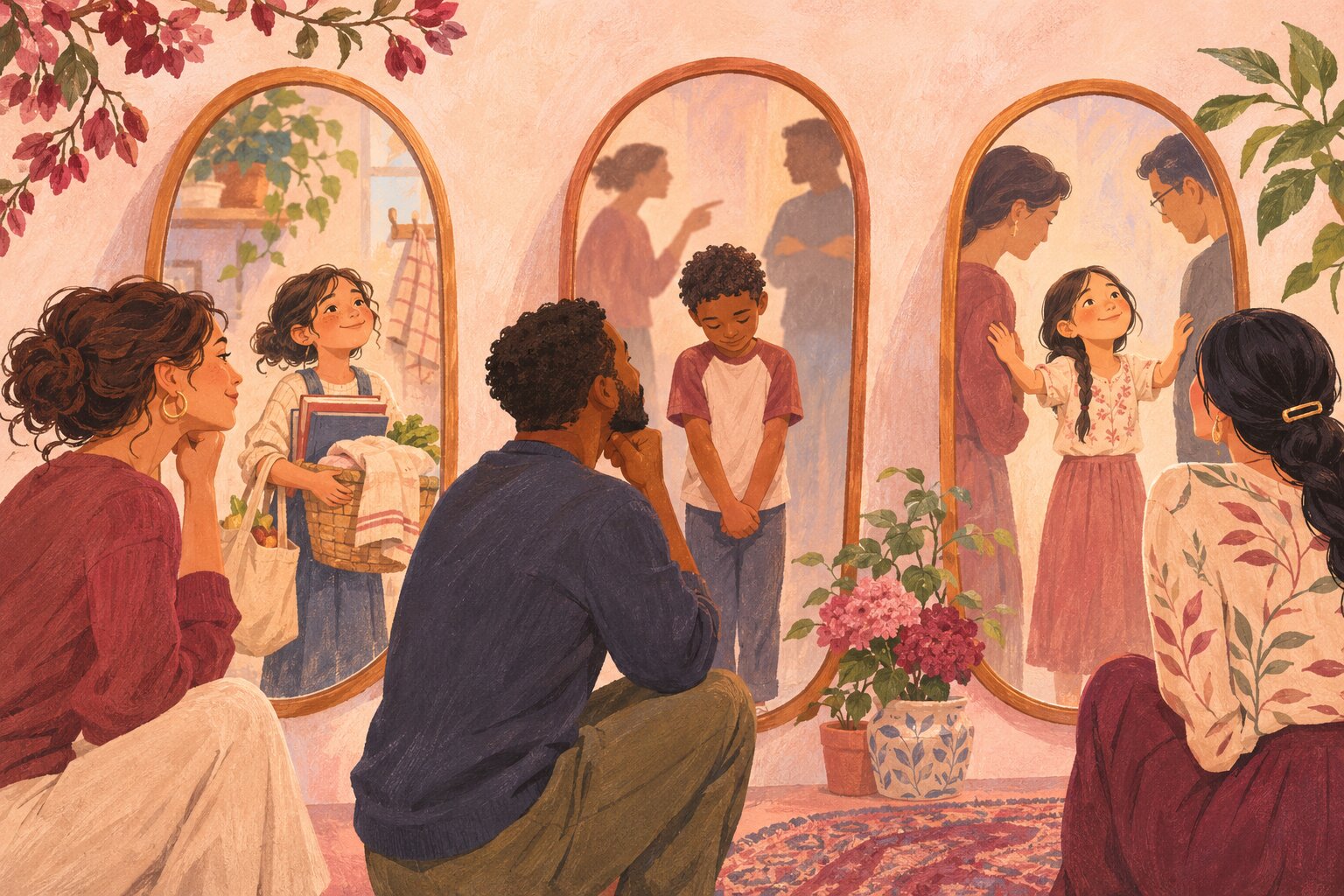
The responsible one, the difficult one and the peacekeeper.
Have you ever spent time with your family and suddenly felt like a much younger version of yourself?
Maybe you’re organizing everything while everyone else relaxes. Maybe you’re the one who gets blamed when tension builds. Or maybe you’re trying to keep everyone happy so the gathering doesn’t fall apart.
Even when we grow up, familiar people and situations can pull us back into familiar roles. These roles usually weren’t chosen consciously. They often developed because they helped us belong, avoid conflict or make sense of what was happening around us.
The responsible one
The responsible one is often described as mature, dependable or “the one we never have to worry about.”
They may have learned to anticipate what other people need, take care of practical things or keep their own feelings tucked away. Sometimes this starts through parentification, when a child takes on emotional or practical responsibilities that would usually belong to an adult.
Being capable isn’t a bad thing. But it can become exhausting when you feel as though you always have to hold everything together. As an adult, this role might look like struggling to ask for help, feeling guilty when you rest or automatically becoming the caregiver in every relationship.
The difficult one
The “difficult one” may be seen as too emotional, angry, reactive or unwilling to go along with everyone else.
But sometimes one person becomes the place where the family’s tension lands. They may be blamed when things go wrong, pulled into conflicts that aren’t theirs or expected to carry emotions that should never have been their responsibility. These kinds of family patterns can make one person’s reactions seem like the entire problem, even when they’re only one part of what’s happening.
That doesn’t excuse harmful behaviour, but it does invite a more useful question than What’s wrong with this person?
We can also ask: What might this behaviour be trying to communicate?
The peacekeeper
The peacekeeper notices shifts in tone, changes the subject when things get tense and may apologize even when they haven’t done anything wrong.
They’re often highly aware of everyone else’s moods. Keeping the peace may have helped things feel safer or more predictable growing up, but it can also mean losing touch with your own needs.
As an adult, the peacekeeper may avoid conflict, overexplain boundaries or feel responsible for how everyone else reacts. They may know exactly what other people are feeling while having a much harder time answering, What do I feel?
You’re allowed to step outside the role
These roles may have helped you cope, connect or feel like you had a place in your family. That doesn’t mean they have to define you forever.
It can help to pause and ask:
- What am I being asked to carry right now?
- How old do I feel in this moment?
- Am I responding to what’s happening now, or to an old pattern?
- What would I choose if I weren’t playing a part?
Stepping outside a familiar role can feel uncomfortable at first. You might disappoint someone, leave a problem unsolved or let another person manage their own emotions. That discomfort doesn’t necessarily mean you’re doing something wrong.
Therapy can offer space to notice these patterns with curiosity, understand where they came from and practise responding in ways that feel more like who you are now.