Cultural Identity: What It Means to Live Between Two Cultures
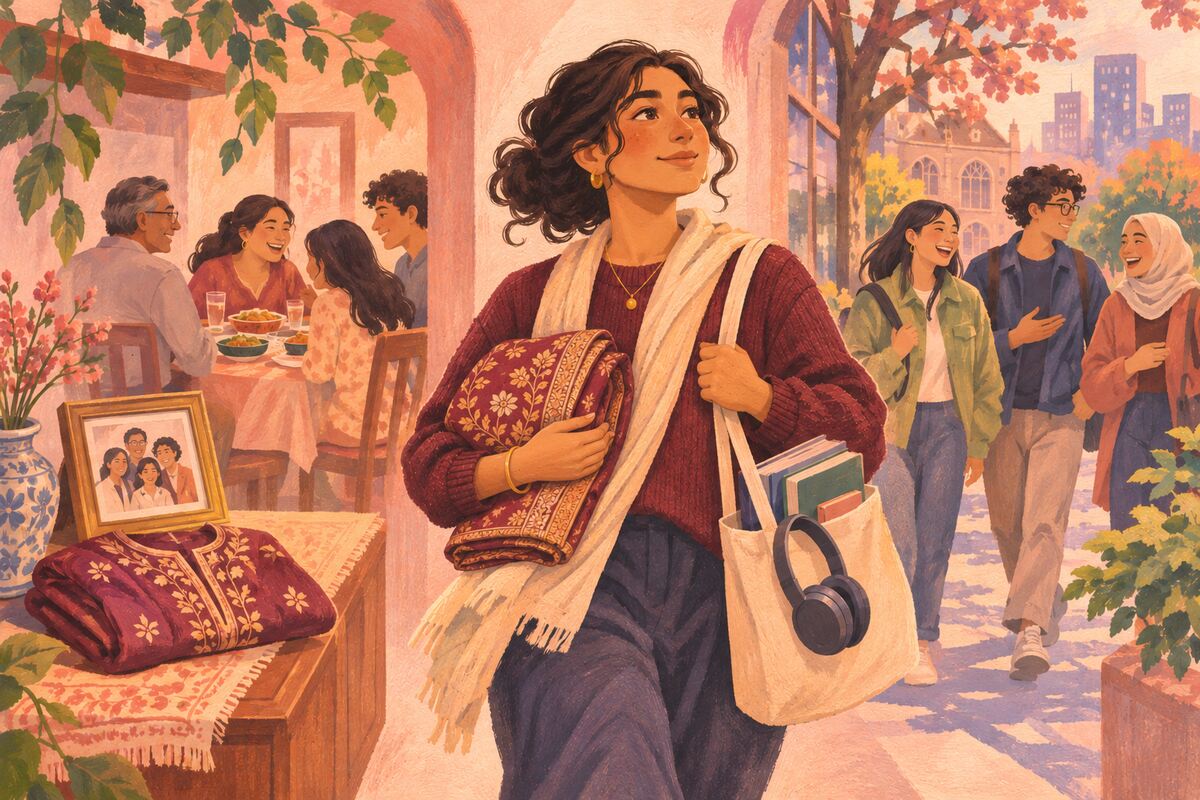
Living between two cultures can feel like you’re constantly adjusting yourself depending on where you are. At home, there may be expectations around family, respect, language, religion or tradition. At school, work or with friends, you may feel pressure to be more independent, outspoken or “Canadian enough.”
Sometimes you feel connected to both cultures. Other times, you feel like you don’t fully belong to either.
This experience is often described as bicultural identity or cultural identity conflict. It can affect how you see yourself, how you make decisions and how comfortable you feel showing different parts of who you are.
When you feel like a different version of yourself
You might notice that you speak differently with family than you do with friends. You may dress differently, eat different foods, follow different rules or have different expectations placed on you depending on the setting.
That doesn’t mean you’re being fake. It may mean you’ve learned how to move between different cultural spaces.
For some people, this flexibility feels natural. For others, it can become exhausting, especially when it feels like you’re always monitoring yourself or trying to avoid disappointing someone. The connection between cultural identity, acculturation and mental health can be complicated, especially when you feel caught between different expectations.
The pressure to choose
Living between two cultures can become especially difficult when people around you treat identity like an either-or decision.
You might hear:
- “Why can’t you be more like your cousin?”
- “You’re becoming too Western.”
- “That’s not how we do things in our family.”
- “You don’t pray or practise religion the way you used to.”
- “What will people think?”
- “You’re forgetting where you came from.”
- “Why do you want to celebrate that? We don’t do that.”
- “You act differently around your friends.”
- “You’re too sensitive. We’re just joking.”
- “You’ll understand when you’re older.”
Comments like these can leave you questioning whether your choices are actually yours or whether you’re constantly trying to prove that you belong.
You might feel guilty for wanting more independence, anxious about disappointing your family or disconnected from traditions that once felt familiar. You can also love your culture while still feeling hurt, frustrated or confused by parts of it.
Those feelings can exist at the same time.
When family expectations and personal identity clash
Cultural identity can become even more complicated when family expectations are connected to gender, marriage, career choices, dating, religion or responsibility.
Maybe you’ve been taught that being a “good daughter” means being agreeable, self-sacrificing or endlessly available. Maybe being a “good son” means being strong, successful, financially responsible or carrying the family’s expectations without complaint.
You might also feel pressure if you don’t identify with the role your family has assigned to you. Maybe you’re questioning your gender identity, exploring your sexual orientation or realizing that labels like “daughter” or “son” don’t fully describe who you are.
You may worry about how your family will respond, whether they’ll understand or whether being honest will change your relationship with them. Or maybe you’re not ready to define yourself at all, but you still feel pressure to have an answer.
Maybe it feels like keeping the peace in your family is up to you. Or maybe you’ve become the person who translates, organizes, helps or keeps everyone else comfortable. It’s not always easy to untangle cultural expectations, family relationships and mental health when you’re the one trying to hold everything together.
You don’t have to choose one side
You’re allowed to create an identity that includes all of you.
That might mean keeping certain traditions while questioning others. It might mean practising religion in a way that feels meaningful to you, speaking a heritage language imperfectly, building relationships your family doesn’t fully understand or setting boundaries that feel uncomfortable at first.
You don’t have to prove that you’re “enough” of one thing. You’re allowed to decide what cultural connection means to you now, not just what it meant to your parents or what other people expect it to mean.
Therapy can be a space to explore identity and cultural expectations, family dynamics and the guilt that can come with wanting something different. You don’t have to arrive with a clear answer. Sometimes the work begins with simply asking:
What parts of my life feel like mine, and what parts am I carrying because I’m afraid of disappointing someone?
You can learn more about therapy at You First or book a free consultation call.