What Body Neutrality Looks Like on a Bad Body Image Day
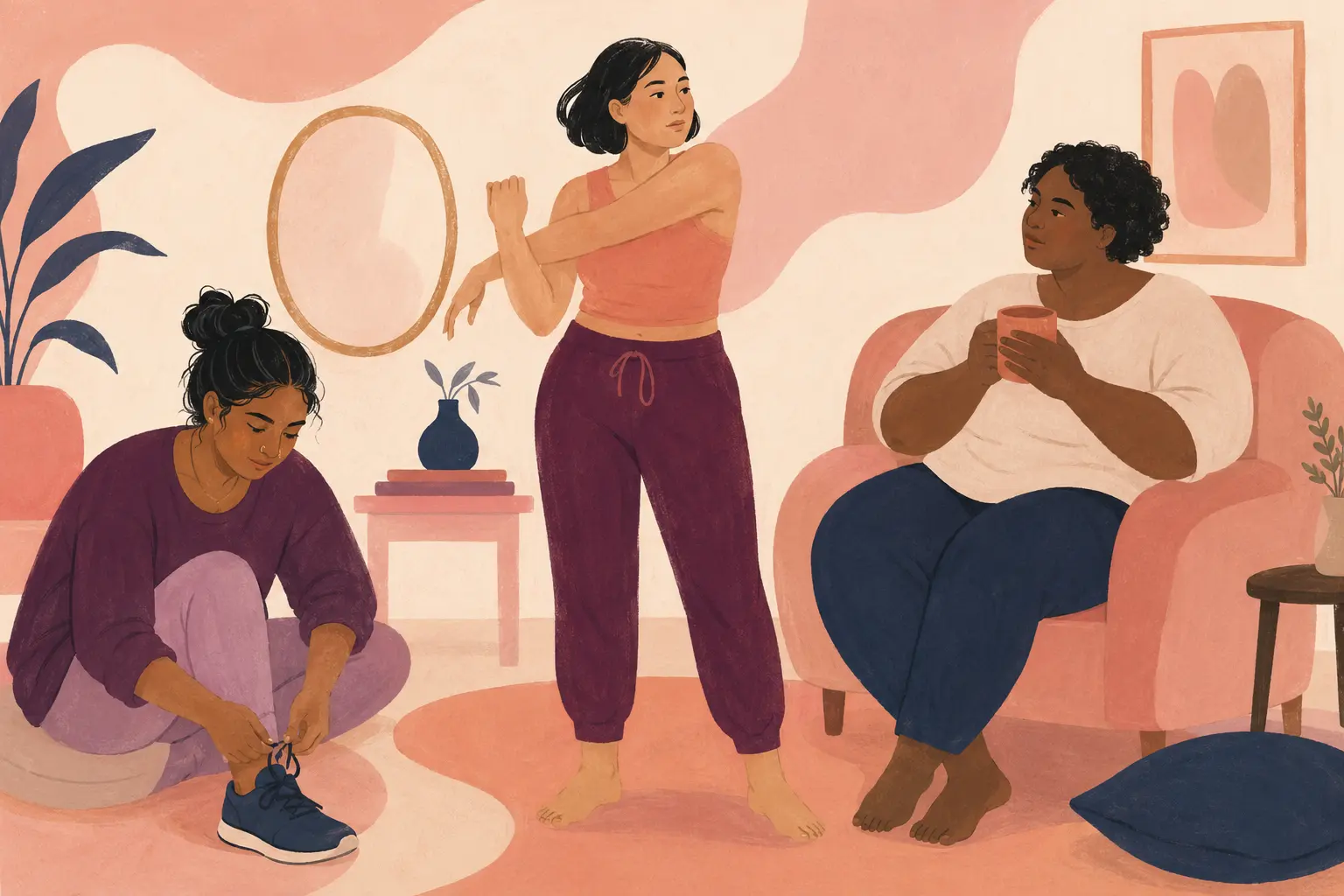
Some days, body acceptance feels possible.
Other days, you catch your reflection, put on an outfit that suddenly feels “wrong,” or notice a change in your body. The criticism can show up before you’ve even finished getting dressed.
When that happens, being told to “love your body” can feel like another assignment you’re failing.
Body neutrality offers a quieter goal. You don’t need to believe your body is beautiful today. You don’t have to replace every negative thought with an affirmation you don’t believe. Your body can simply be your body, and you can still treat it with care and respect.
Neutral doesn’t mean giving up
Body neutrality isn’t about ignoring your body or pretending difficult feelings aren’t there. It’s about stepping away from the pressure to evaluate your appearance all day.
Research into body-neutral content is still developing, but early studies are promising. In one study, brief exposure to body-neutral TikTok content was linked with better mood, body satisfaction, and appreciation for what the body can do compared with thin-ideal content.
That doesn’t mean watching a few videos will undo years of body pressure. It does suggest there’s value in stepping away from appearance-based evaluation toward a more flexible relationship with your body.
On a difficult body image day, neutrality might sound like:
- “This is my body today.”
- “I don’t have to decide whether I look good right now.”
- “My body deserves food even when I don’t feel confident.”
- “I can choose clothes that feel comfortable.”
- “A body image thought isn’t an instruction.”
These thoughts may not feel exciting, but they’re often easier to believe.
Reduce the body checking loop
Bad body image days can involve a lot of checking. You might look repeatedly in mirrors, compare photos, focus on how your clothing fits, weigh yourself or ask someone else for reassurance.
Checking can feel like it’ll give you certainty. Usually, it keeps the distress going.
Instead of avoiding every mirror, try making the interaction more practical:
- Use the mirror for the task you intended, then step away.
- Look at your whole body instead of focusing on one area.
- Notice when you’re checking again to see if your feelings have changed.
- Delay the urge for ten minutes and shift your attention elsewhere.
- Put away the scale or unfollow accounts that reliably trigger comparison.
The goal isn’t to pretend your body doesn’t exist. It’s to give the critical part of your mind fewer chances to collect evidence against you.
Choose comfort instead of punishment
You’re allowed to wear clothes that fit your current body.
On a hard day, clothing that digs, pulls or needs constant adjusting can keep your attention on your body for hours. Choose the outfit that lets you breathe, sit, eat, work and move comfortably. Repeat an outfit you already know feels safe.
Comfort isn’t giving up. It’s a reasonable way to care for yourself when body image feels heavy.
Keep eating when body image is loud
A difficult body image day can create the urge to skip a meal, compensate, “be good” or earn food through movement.
Those choices may offer a brief feeling of control, but restriction often makes thoughts about food and body even louder. Your body still needs regular nourishment on days when you dislike it.
If deciding what to eat feels overwhelming, choose something familiar and accessible. Eat with someone supportive, follow your usual meal rhythm or remind yourself: body image distress isn’t a nutritional need.
You don’t have to feel deserving before you eat.
Shift your attention gently
Focusing on what your body can do may help, but it shouldn’t become another demand. Not everyone moves without pain, and you don’t have to feel grateful for every bodily experience.
Try noticing something simple:
- My lungs are taking the next breath.
- My hands can hold this warm mug.
- My body can feel the water in the shower.
- I can offer my body rest without needing to praise it.
You can also move your attention outside your body. What task matters today? What music changes the atmosphere? Who helps you feel like more than an appearance?
Sometimes the most body-neutral choice is to stop making your body the main event.
Question the rules, not your reflection
Body image distress is often connected to what you believe your appearance means.
“My body changed” can quickly become “I failed.”
“My clothes fit differently” can become “Everyone will judge me.”
“I don’t like this photo” can become “I should hide.”
Try pausing between the observation and the story. Ask yourself:
- What rule am I measuring myself against?
- Would I apply this standard to someone I love?
- Is this thought asking me to care for my body or control it?
- What would I do next if I didn’t need to fix my appearance today?
The thought may not disappear, but you don’t have to organize your whole day around it.
Make a bad-body-image-day plan
When distress is high, it’s harder to decide what might help. A simple plan can give you something to return to:
- Wear the comfortable outfit.
- Eat regularly.
- Pause checking and comparison.
- Avoid making major appearance decisions.
- Choose movement only if it feels supportive.
- Contact someone who won’t turn the conversation into diet talk.
- Do one thing that reconnects you with your life outside your body.
A bad body image day doesn’t require a makeover or a promise to start over tomorrow. Sometimes the goal is simply to move through the day without making the distress worse.
You don’t have to love your body to stop fighting it
Body neutrality isn’t a finish line. Some days you may feel appreciation, confidence, grief, frustration or nothing much at all.
The goal is flexibility. Your body image can change without deciding whether you eat, rest, connect, show up or deserve care.
If body checking, food guilt, restriction, binge eating, compulsive exercise or body shame are taking up significant space, support is available. Learn more about therapy for eating disorders, disordered eating and body image, or book a free 15-minute discovery call.